
You've finally committed. To study. For the MCAT.
Maybe you've been putting it off for months. Maybe you just finished your prerequisites and the test feels like this looming monster you're not ready to face. Or maybe you're the ultra-prepared type who wants to start studying now, even though your test date is a year away.
Either way, you're here because you want to know: Where do I even start?
Here's what most pre-meds do on Day 1: They panic-buy a set of review books, open Chapter 1 of the Physics book, read for 20 minutes, get overwhelmed, and then spend the next two hours scrolling through Reddit threads about whether they're "doomed" if they haven't taken Biochemistry yet.
Sound familiar?
Instead, I spent the entire day researching how to study for the MCAT. I didn't memorize one amino acid. I didn't watch a single Khan Academy video. I invested those first hours into meta-planning: figuring out the best resources, the most effective study techniques, and realistic timelines from people who had already crushed this test.
That decision—to prepare before preparing—was one of the smartest things I did. It set me up for 10 weeks of efficient, strategic studying that ultimately led to a score of 526.
And that's exactly what this guide is going to help you do.
Why "Day 1" Matters More Than You Think
The MCAT isn't like your college exams. You can't cram the week before. You can't just "read harder" and expect a great score. This test requires a system—a carefully constructed approach that combines the right resources, realistic timelines, and evidence-based study techniques.
Most students waste weeks (or months) spinning their wheels because they never took the time to build that system. They jump straight into content review without a map, without a plan, and without understanding what the test actually demands.
The result? Burnout. Inconsistent scores. Frustration.
You're going to avoid all of that. Because by the end of this article, you'll have a clear, actionable roadmap for how to start studying for the MCAT—the right way, from Day 1.
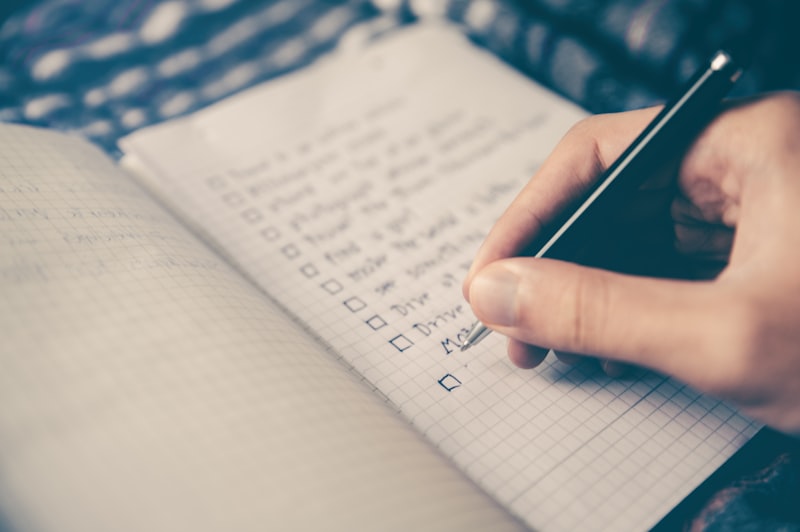
Strategic planning beats reactive studying every single time.
The Four Phases of MCAT Studying: Your Journey from Start to Test Day
Before we dive into specific resources and timelines, you need to understand the big picture. Think of your MCAT prep as a story with four distinct chapters:
Phase 1: Preparing to Study
This is where you are right now. This phase is all about strategic planning: researching the best textbooks, videos, and practice materials; understanding different study timelines; and learning proven memorization techniques.
You're not learning content yet. You're building the foundation that will make all your future studying more efficient.
Duration: 1-2 days (yes, really—don't overthink this part)
Phase 2: Learning Content
This is the phase where you systematically go through all the material tested on the MCAT. You'll use textbooks, videos, and flashcards to familiarize yourself with everything from organic chemistry reaction mechanisms to psychological theories.
Duration: 2-6 weeks, depending on your starting knowledge and timeline
Phase 3: Practice Problems (Practice-Guided Content Review)
Here's where things get interesting. You'll start taking practice exams and working through problem sets—but not just to "practice." You'll use every mistake as a diagnostic tool to identify content gaps, then go back and master those specific topics in depth.
This is where the magic happens. This is where good scores become great scores.
Duration: 4-8 weeks
Phase 4: Countdown to Test Day
The final week (or two) before your exam. This is about maintaining confidence, fine-tuning test-taking strategies, and keeping your stamina sharp without burning out.
Duration: 1-2 weeks
Now, let's talk about how to actually execute on this framework.
What to Do on Day 1: Your MCAT Preparation Blueprint
Here's your mission for Day 1 (and maybe Day 2, if you're thorough): Research everything.
I'm serious. Dedicate a full day to answering these questions:
- What are the absolute best resources for MCAT prep?
- What study timeline makes sense for my situation?
- What memorization and learning techniques are backed by research?
The Essential Resources Every MCAT Student Needs
Let me save you hours of Reddit rabbit holes. Here are the resources I found genuinely helpful throughout my 10 weeks of studying—and the ones you should prioritize:
1. AAMC MCAT Official Prep Online-Only Bundle ($320)
Verdict: Absolutely non-negotiable.
These are practice tests and problems from the official MCAT test-makers themselves. The problems cover topics the AAMC will actually test. The format is identical. The logic is the same.
If you're only going to buy one thing, buy this. You cannot replicate the value of official AAMC material with any third-party resource.
What's included:
- Practice exams (full-length, timed, scored)
- Question packs for each section
- Section banks (harder, passage-heavy practice)
2. Third-Party Practice Tests: Altius or Blueprint (10-pack, ~$150–200 with deals)
Verdict: Essential for high scorers.
Third-party practice tests are great for building stamina and exposing yourself to challenging material before you touch the precious AAMC exams. I personally used Altius tests and found them realistic and difficult in a useful way. Blueprint (formerly Next Step) is another solid choice.
Stay away from brands that are known for unrealistic difficulty or poor explanations (you'll find these discussed on Reddit). You want practice that challenges you without demoralizing you with unfair questions.
When to use them: Start taking third-party exams once you've completed your initial content review. Use them to identify weak areas before you move to AAMC material.
3. Anki Flashcards (Free app, multiple decks available)
Verdict: The most efficient memorization tool you'll ever use.
Anki is a spaced-repetition flashcard app. You see a term, try to define it, rate your confidence, and an algorithm calculates when you should see it again for optimal retention.
There are thousands of vocabulary words and concepts on the MCAT. You cannot memorize them all through passive reading. Anki makes it possible.
Where to get decks:
- Rebopbebop's Deck: Good for foundational content review
- JackSparrow's Deck: More detailed, better for competitive scores (520+)
- Premed95 or MileDown Decks: Also popular and comprehensive
How to use it: Download the app for your phone (note: iPhone version costs ~$25, but Android and web versions are free). Start reviewing cards daily once you've been introduced to the material. Consistency is everything here.
4. Jack Westin's CARS Website (Free)
Verdict: The best free CARS practice available.
Unlimited (almost), high-quality CARS passages with solid explanations. The Critical Analysis and Reasoning Skills section is notoriously hard to improve, but Jack Westin's daily practice helped me build focus and stamina.
How to use it: Start doing 1-2 passages per day early in your prep. Build the habit. (We'll dive deeper into CARS strategy in a future article.)
5. Kaplan Subject Review Books (7-book set, ~$100-200 new, or borrow from a friend)
Verdict: Solid, comprehensive content review.
The Kaplan books have basically everything you need to know—and nothing you don't. They're well-organized and easy to read.
How to use them: In your Learning Content phase, read through these systematically. I read one chapter from each of the 7 books per day for two weeks, covering all 12 chapters per book. It was intense, but it worked.
6. Khan Academy MCAT Videos (Free)
Verdict: AAMC-partnered gold.
Here's something most students don't know: The AAMC literally paid Khan Academy to create MCAT prep videos. That means the level of detail is nearly perfect—not too surface-level, not too deep.
Khan Academy videos are especially useful when you're in the practice-guided content review phase (more on this in Article 5). When you miss a question on a specific topic, watching the full Khan Academy video series on that topic is one of the fastest ways to fill the gap.
Alternative: If Khan Academy MCAT shuts down by the time you're reading this, try MCAT Self-Prep's videos or AK Lectures (especially for biochemistry).
How to use them: Don't watch videos passively. Take notes on what you don't know. We'll cover advanced video-watching strategies (like speed control) in a future article.
7. Reddit's r/MCAT Community (Free)
Verdict: A goldmine—if you filter out the noise.
The r/MCAT subreddit has incredible advice, including some of the best strategy posts I've ever read (like "How I Scored 525 and You Can Too"—a must-read).
But: Avoid the memes, the anxiety spirals, and the sarcastic naysayers. Go there for advice, timelines, and resource recommendations. Don't go there to compare yourself to others or get discouraged.
How to use it: Search for high-quality posts (sort by "Top" and "All Time"), bookmark them, and get out. Don't scroll aimlessly.

The right resources save you hundreds of hours of wasted effort.
The "Do I Really Need All of This?" Question
Look, I get it. This list might feel overwhelming. You're probably thinking, Do I really need to spend $500+ on prep materials?
Here's my answer: You need the AAMC bundle. Everything else is negotiable.
If money is tight, focus on the official AAMC material, free Anki decks, free Khan Academy videos, and Jack Westin CARS. You can absolutely score well with just those resources if you use them strategically.
But if you're aiming for a highly competitive score (515+), I'd strongly recommend adding third-party practice tests and Kaplan books to the mix. The investment is worth it.
MCAT Study Timelines: How Long Should You Actually Study?
This is one of the most common questions: How long do I need to prepare for the MCAT?
The answer depends on three things:
- Your content knowledge baseline (Have you taken all the prerequisites? Do you need to self-study Biochemistry or Psychology?)
- Your target score (A 505 requires different prep than a 520+)
- Your available time (Can you study full-time, or are you balancing classes/work?)
The AAMC's Recommendation (And Why It's Not Enough)
The AAMC recommends a minimum of 200-300 hours of study time.
Here's the problem with that: If half of test-takers follow this advice and study longer, and the other half study less, then 200-300 hours yields an average score around 500-502. That's fine if you're aiming for the median. But if you want a competitive score, you need to put in more.
Realistic Timelines for Different Goals
For a 510-512 (solid, competitive score):
- 300-450 hours over 10-14 weeks
- Assumes you've taken most prerequisites and have a decent baseline
For a 515-520 (highly competitive score):
- 450-550 hours over 12-16 weeks
- Requires thorough content mastery and extensive practice
For a 520+ (top-tier score):
- 600+ hours over 12-20 weeks
- I personally clocked 700 hours over 10 weeks because I had to self-study Biochemistry, Psychology, and Anatomy & Physiology (which are heavily tested). If you've taken all prerequisites, 500-600 hours might be enough—but don't cut corners.
I jam-packed elements of both intensive and extended study plans into my 10-week schedule. Here's what that looked like:
Weeks 1-2: Content review (reading all Kaplan textbooks, 8-10 hours/day)
Weeks 3-6: Practice-guided content review (taking practice tests, identifying weaknesses, watching Khan Academy on weak topics)
Weeks 7-9: AAMC material (official practice exams, question packs, section banks)
Week 10: Final review and test-day prep
Important note: I did NOT stick to my original plan. I created 7 different versions of my study schedule as I discovered what worked and what didn't. For example, I hadn't planned to use Khan Academy at all, but once I discovered how effective the videos were, I incorporated 10-13 hours of video content per day in my final weeks.
The lesson? Create a timeline as your starting framework—but stay flexible. (We'll dive deeper into adaptive scheduling in the next article.)
Active Recall: The Learning Technique That Changes Everything
Here's a hard truth: Most students study wrong.
They read and re-read textbooks. They highlight whole pages. They take beautiful, color-coded notes. They feel like they're working hard—and they are—but their retention is terrible.
Why? Because passive learning doesn't work.
What does work is active recall: forcing your brain to retrieve information rather than just recognizing it.
The Science Behind Active Recall
Dr. Ali Abdaal (who ranked first at Cambridge Medical School) has an incredible video series called "How to Study for Exams" that breaks down research-based learning methods. His core principle: Practicing retrieval is more important than trying to jam information into your brain.
Think about it this way: On the MCAT, you won't be asked to recognize the right answer in your textbook. You'll be asked to pull the answer out of your brain under pressure. So you need to train that exact skill.
Active recall strengthens the exact neural pathways you'll use on test day.
How to Use Active Recall for the MCAT
Here are the techniques I used (ranked by how instrumental they were to my success):
To Increase Learning Rate:
- Sleep 8-9 hours every night. This is non-negotiable. Sleep consolidates memories and gives you the willpower to push through long study days.
- Drink excessive water. Hydration improves learning efficiency.
- Exercise daily. Aerobic exercise increases oxygen delivery to your brain. I'm not talking about intense workouts—even a 20-minute walk helps.
- Take caffeine strategically. Not for energy, but for long-term potentiation (the process that strengthens neural connections). A cup of coffee before reviewing material can enhance retention.
- Supplement for brain health. I took fish oil, ginkgo biloba extract, and other nootropics. (Disclaimer: I'm not a doctor. Do your own research.)
To Decrease Forgetting Rate:
- Review immediately after learning. Don't wait until the next day. Test yourself right after finishing a chapter or video.
- Prioritize frequency over depth. Review something to 80% familiarity and move on. Come back to it later rather than trying to master it in one sitting.
- Keep lists of hard-to-memorize facts. I had running documents of tricky concepts and reviewed them frequently.
- Honestly assess your familiarity. Don't lie to yourself about what you know. If you're shaky on a topic, mark it for more review.
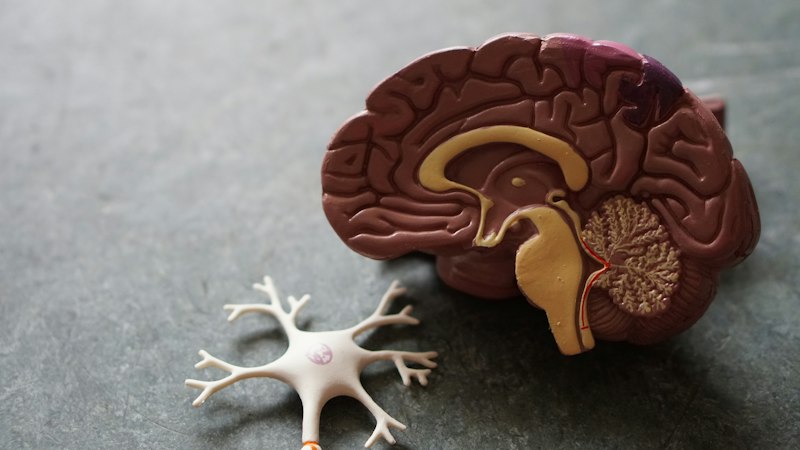
Active recall literally rewires your brain for test-day performance.
"Isn't This Extreme?"
You might be thinking, This sounds obsessive. Do I really need to optimize my sleep, water intake, and supplement routine just to study for a test?
Fair question. And honestly? You might not need all of this.
I studied with no regrets. And when I walked out of that testing center, I knew I had given it everything.
You'll need to decide for yourself how much you're willing to invest. But at minimum, prioritize sleep, active recall practice (like Anki), and honest self-assessment. Those three alone will put you ahead of most test-takers.
Your Day 1 Action Plan: What to Do Right Now
Alright. You've made it through the guide. Now it's time to take action.
Here's your checklist for today (or this weekend):
☐ Step 1: Assess Your Baseline
- Have you taken all the MCAT prerequisites (Gen Chem, Orgo, Physics, Bio, Biochem, Psych, Soc)?
- If not, which subjects will you need to self-study?
- What's your honest starting point? (If you're not sure, consider taking a diagnostic practice test—but don't let the score discourage you. It's just data.)
☐ Step 2: Set Your Target Score and Timeline
- What score do you need for your target schools? (Research average MCAT scores for those schools.)
- When do you want to take the test? (Work backward from application deadlines.)
- How many hours per week can you realistically study?
- Calculate your total study timeline based on the hours-per-score benchmarks above.
☐ Step 3: Invest in the Right Resources
- Must-have: AAMC MCAT Official Prep Bundle
- Highly recommended: Third-party practice tests (Altius or Blueprint), Anki flashcard decks, Kaplan books (or borrow from a friend)
- Free essentials: Khan Academy MCAT videos, Jack Westin CARS
☐ Step 4: Create a Rough Study Schedule (Version 1)
- Block out your study hours for the next week.
- Identify when you'll do content review, when you'll start practice problems, and when you'll take your first practice exam.
- Remember: This is version 1. You'll adapt as you go. (More on that in the next article.)
☐ Step 5: Learn About Active Recall and Commit to It
- Watch Dr. Ali Abdaal's "How to Study for Exams" series (Parts 1 and 2 on YouTube).
- Download Anki and familiarize yourself with how it works.
- Commit to using spaced repetition and active retrieval every single day.
Final Thoughts: You're Not Starting from Scratch—You're Starting Smart
Most students begin their MCAT prep by opening a textbook and hoping for the best. You're not doing that.
By taking the time to build a strategic foundation—by researching resources, understanding timelines, and committing to evidence-based learning techniques—you've already put yourself ahead of the curve.
The MCAT is beatable. It's not about genius. It's about system + effort + adaptation.
You've got the system now. The effort is up to you. And the adaptation? We'll cover that next.
But for now, take a breath. You've done the hardest part—you've started.
Ready to Take the Next Step?
You've got the blueprint. You've got the resources. Now it's time to execute.
But here's the thing: Even with the best plan, it's easy to feel overwhelmed, get stuck, or lose motivation along the way. That's where having a structured system and a personal guide can make all the difference.
If you need personalized guidance tailored to your unique situation:
Book a 1-on-1 tutoring session where we'll audit your current plan, identify your biggest gaps, and create a custom strategy to maximize your score in the time you have.
If you want free MCAT tips, mindset strategies, and study hacks delivered weekly:
Sign up for the Med-RAMP newsletter and get actionable advice straight to your inbox—no fluff, just the strategies that actually move the needle.
The MCAT doesn't have to be the nightmare everyone says it is. With the right system, the right mindset, and the right support, you can walk into test day with confidence—and walk out knowing you gave it everything.
Let's make it happen.